Last updated: September 10, 2026
China is tightening the safety and conformity requirements for power banks.
This regional assessment follows the Reachinno Global Power Bank Compliance & Market Access Framework™ (RK-14), which connects market-entry requirements with product architecture, compliance planning and engineering validation.
For manufacturers, brands and OEM buyers, the important change is not simply a new test standard. China is moving toward a more comprehensive compliance model that connects battery safety, product architecture, intelligent monitoring, manufacturing consistency, traceability and post-certification supervision.
The central change is GB 47372-2026, Safety Technical Specification for Power Bank, a mandatory national standard published on March 31, 2026 and scheduled to take effect on April 1, 2027.
China’s market regulator and certification authority have also announced a new CCC implementation framework for mobile power products. A transition period runs through March 31, 2027, while full implementation of the new requirements begins April 1, 2027. Existing certified power banks and relevant lithium-ion batteries and battery packs must complete certificate conversion by April 1, 2027.
For an OEM project, the practical message is simple:
Do not treat the 2027 CCC change as a certification-stage problem. Treat it as a product-development requirement from the beginning of the project.
China’s power bank CCC requirements are being updated around GB 47372-2026, a mandatory national standard published on March 31, 2026 and scheduled to take effect on April 1, 2027. The new framework strengthens thermal-abuse and puncture-related safety evaluation, product consistency, manufacturing controls and post-certification supervision. Existing certified products should be reviewed for certificate conversion before April 1, 2027.
This guide is part of Reachinno’s Global Power Bank Compliance & Market Access 2026 knowledge system. For a cross-market comparison and the full framework, see the pillar guide.
Quick Answer: What Is Changing for Power Bank CCC Certification in China?
China’s 2026 power bank compliance update introduces several important changes. The Power Bank Certifications & Global Compliance in 2026 framework continues to expand as the central architecture connecting product classification, safety, EMC/wireless, environmental requirements and market-specific certification.
The State Administration for Market Regulation says the new framework specifically strengthens thermal-abuse and puncture testing, production quality assurance, product consistency and post-certification supervision.
1. What Is GB 47372-2026?
GB 47372-2026, Safety Technical Specification for Power Bank, is China’s new mandatory national standard for power banks.
The official Chinese national standards database lists:
- Standard: GB 47372-2026
- Chinese title: 移动电源安全技术规范
- English title: Safety technical specification for power bank
- Published: March 31, 2026
- Effective: April 1, 2027
- Status: Scheduled for implementation
The standard is issued under China’s national standards system and is mandatory rather than voluntary.
This distinction is important.
GB 47372-2026 is not simply another recommended engineering guideline. It becomes part of the regulatory basis for the CCC certification framework for covered mobile power products.
2. Why Is China Updating Power Bank Requirements?
The regulatory direction reflects a broader concern around lithium-ion battery safety and product quality.
A modern power bank combines:
- lithium-ion cells or battery packs
- charging electronics
- DC/DC conversion
- USB-C or other output interfaces
- battery management circuitry
- thermal management
- firmware or protection logic
- mechanical enclosure
- manufacturing processes
A failure in any one of these layers can affect the safety of the complete product.
For this reason, the 2026 regulatory update places more emphasis on the complete product system, rather than relying only on a laboratory test result.
The official announcement highlights three major areas:
- adding GB 47372-2026 as a CCC certification basis;
- strengthening production quality assurance and product consistency;
- increasing classified supervision and post-certification oversight.
This is an important shift for OEM development. A more realistic model is:
Specification → Engineering Architecture → Safety Validation → Certification → Controlled Manufacturing → Traceability → Post-Market Compliance
3. What Products Are Covered by China’s Power Bank CCC System?
China introduced compulsory certification for mobile power supplies and certain lithium-ion batteries and battery packs in 2023.
Under the current CCC product classification, mobile power products are listed under product category 0914. The scope includes portable power supplies containing lithium-ion batteries and/or battery packs, with AC/DC input and/or output, including examples such as power banks, portable energy storage power supplies and camping mobile power supplies.
The 2023 regulatory announcement describes mobile power under the CCC framework as portable power supplies weighing no more than 18 kg and containing lithium-ion batteries and/or battery packs with AC/DC input/output.
However, product classification should always be confirmed against the current CCC catalogue, implementation rules and the exact product architecture.
This matters especially for products that sit between categories, such as high-power laptop power banks, portable energy storage products, camping power stations, products with AC output, products with integrated wireless charging, products containing multiple battery packs, and multifunctional electronic devices with embedded batteries.
Do not assume that two products with similar marketing names automatically have identical certification scope.
4. The 2027 Transition Timeline
One of the most important parts of the new framework is the transition period.
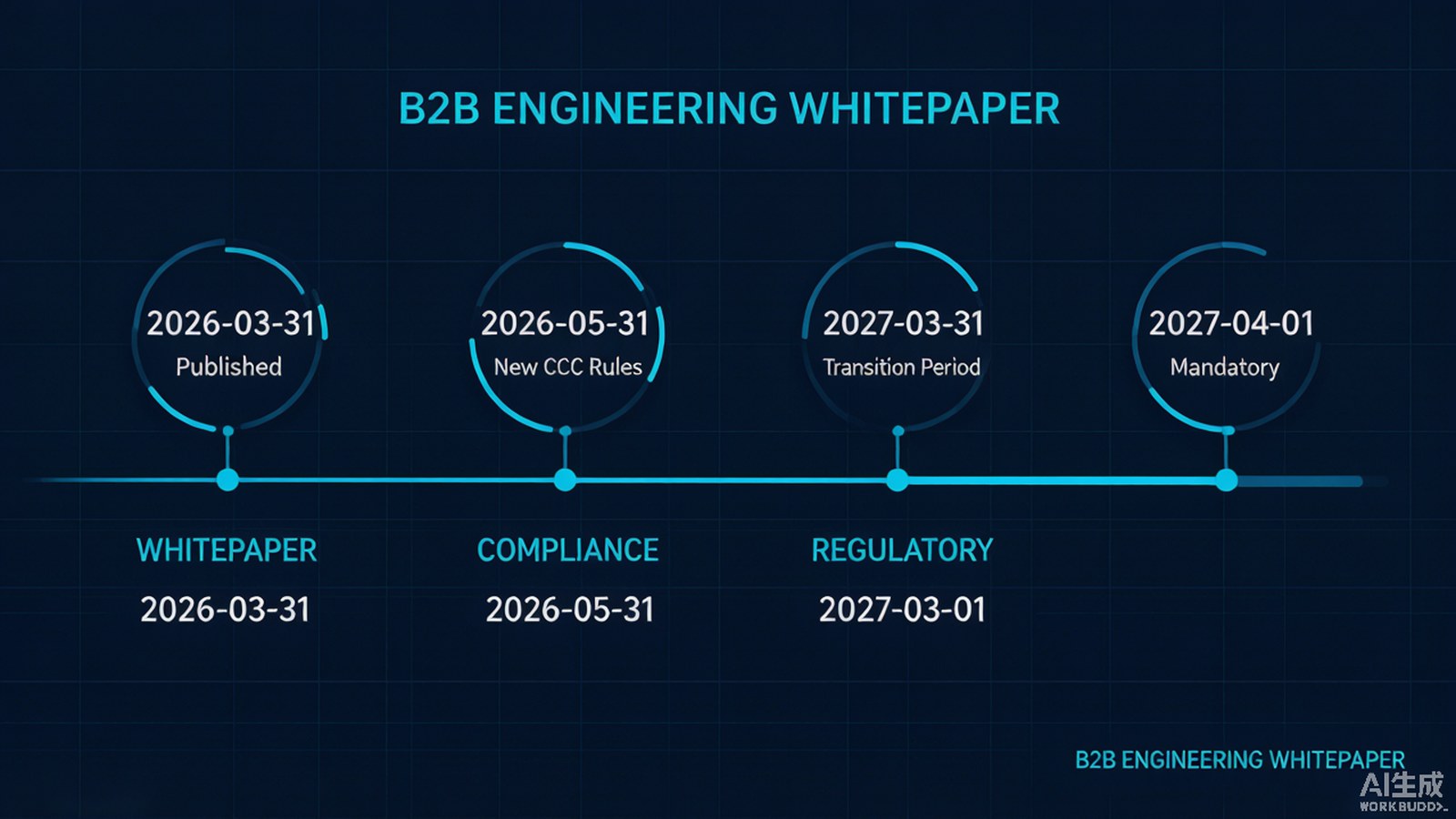
Key dates
The official announcement states that during the transition, certification bodies may conduct certification according to either the old or new rules according to the applicant’s choice. From April 1, 2027, the new requirements must be fully implemented. Existing certified mobile power products and their internal lithium-ion batteries/battery packs must complete certificate conversion before that date.
What this means for OEM buyers
If you are launching a new power bank in 2026, there are two very different strategies:
Strategy A — Design for today’s requirement only. You may reduce short-term development work but create a future conversion problem.
Strategy B — Design with the 2027 requirement in mind. You may invest more engineering effort earlier, but reduce the risk of redesign, retesting, tooling changes and certification delays.
For products expected to remain in the market for several years, Strategy B is usually the more robust engineering approach.
5. What Is New in GB 47372-2026?
The exact implementation of individual tests should always be confirmed against the official standard and the applicable CCC certification rules.
At a system level, however, China’s regulators have highlighted several important directions.
5.1 Stronger Thermal-Abuse Evaluation
Thermal abuse is one of the critical risks in lithium-ion battery systems.
A power bank can experience abnormal heat from overcharging, high ambient temperature, internal resistance, high output power, converter losses, battery aging, blocked heat dissipation, manufacturing defects and abnormal charging conditions.
The new CCC framework specifically identifies thermal abuse as an area receiving stronger testing attention.
For engineering teams, this means thermal safety should not be considered only at the cell level. The complete thermal chain should be evaluated:
Cell → Protection IC/BMS → Charging IC → DC/DC converter → PCB → enclosure → ambient environment
6. Puncture Testing and Battery Mechanical Safety
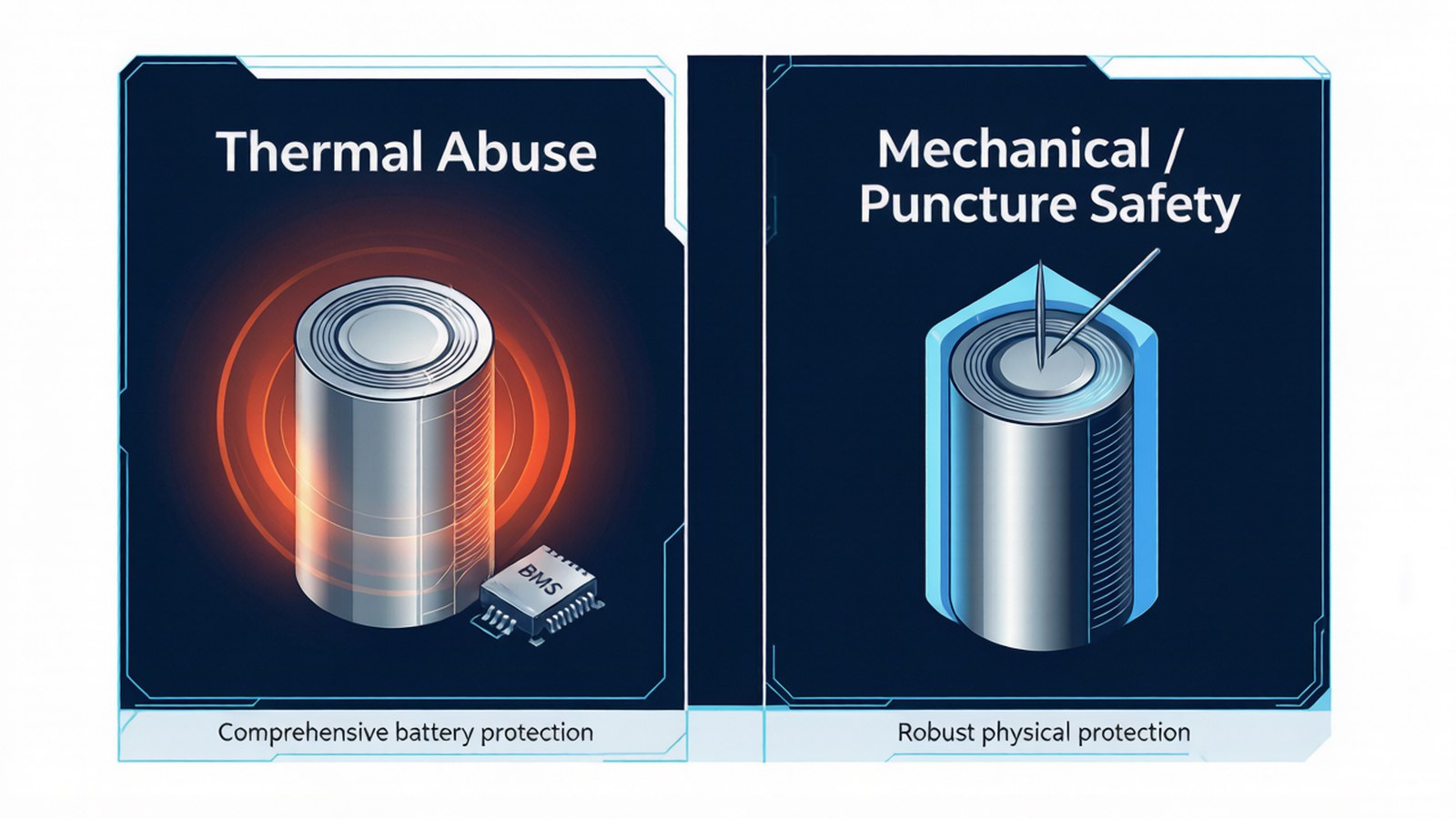
Another important change is the stronger emphasis on puncture testing.
The regulator specifically identifies needle/puncture testing as one of the strengthened safety indicators under the new framework.
Puncture resistance is not simply a battery-cell issue. The overall safety response depends on cell construction, electrode design, separator characteristics, battery pack structure, mechanical compression, enclosure design, cell spacing, thermal propagation control, BMS response and manufacturing consistency.
This is particularly important for compact high-capacity products where mechanical packaging is tightly constrained.
A 20,000mAh power bank with high output power has a very different engineering challenge from a basic low-power 5,000mAh product.
7. Intelligent Battery Management Is Becoming More Important
One of the most interesting aspects of the new technical direction is the move toward more intelligent management.
China’s public certification information platform explains that GB 47372-2026 introduces requirements related to real-time monitoring of important battery parameters such as voltage and temperature, abnormal-information storage/readout, unique product identification and manufacturing-process control.
This changes the engineering question. Instead of asking “Does this power bank pass the test?”, OEM teams increasingly need to ask “Can the product continuously detect, control and document abnormal conditions?”
That has direct implications for BMS architecture, temperature sensing, charging control, firmware, fault detection, event logging, product traceability and engineering documentation.
For next-generation power banks, compliance increasingly intersects with embedded electronics and software architecture.
8. Product Traceability Is Also Changing
China is also strengthening CCC mark traceability.
A separate CNCA pilot reform for power banks and other products introduced CCC marks with a traceability QR code.
For newly certified products in the pilot categories, the QR-code requirement began March 1, 2026. From March 1, 2027, the requirement applies to all certified products in the relevant pilot product fields.
The QR code can provide information such as certification certificate number, producer, product specification/model, certificate status and issuing organization.
This means certification marking is moving beyond a simple static logo. It becomes part of a broader traceability system.
For OEM projects, this creates another practical requirement: the product name, model, certification configuration, factory information and production records must remain consistent throughout the supply chain.
9. Product Consistency May Become as Important as the Test Report
This is one of the most important lessons for international OEM buyers.
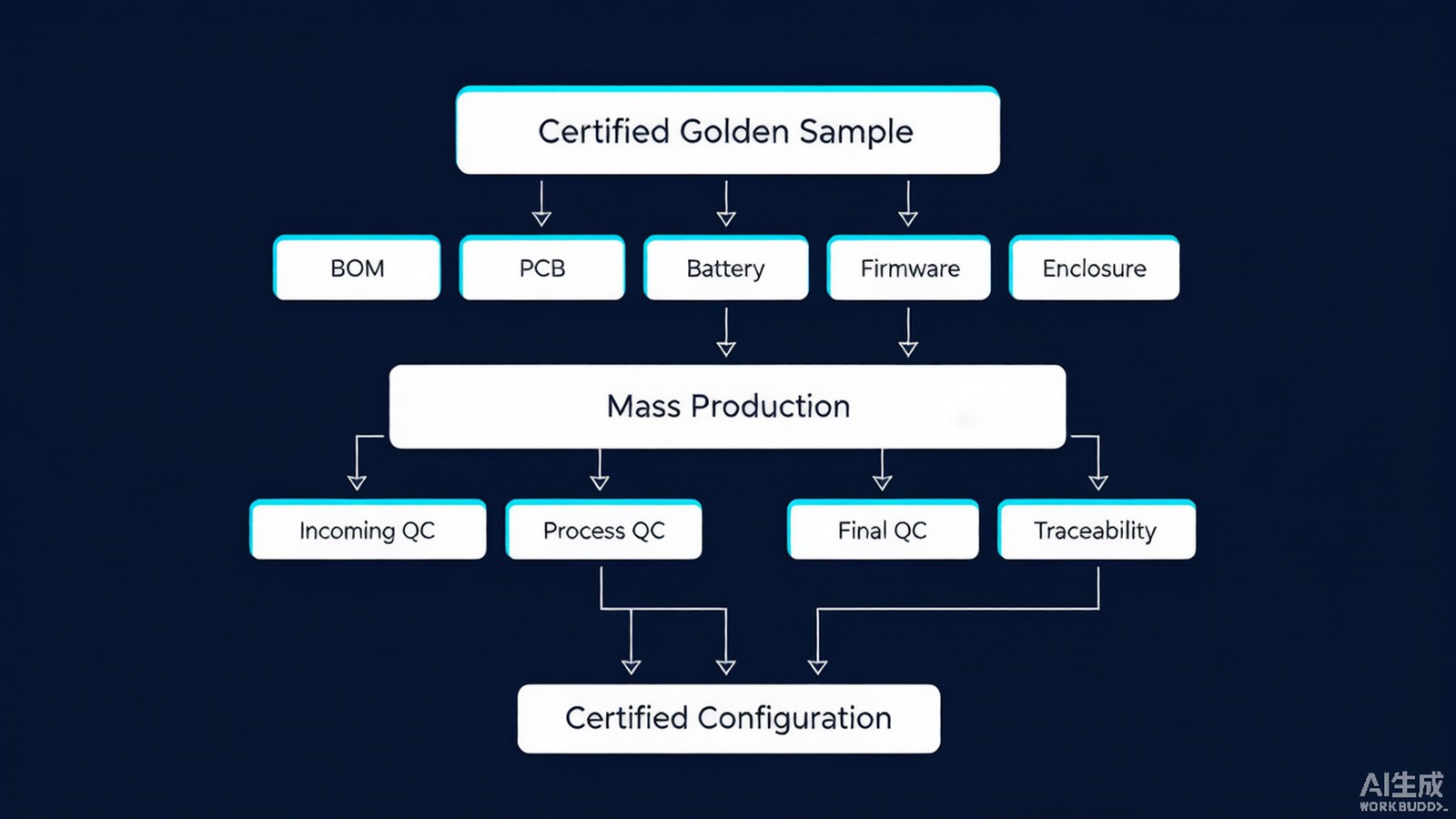
A certification report describes a tested configuration. Mass production creates thousands of physical products. The compliance risk appears when mass production ≠ certified configuration.
Examples include changing the battery cell supplier, capacity, BMS IC, charging IC, PCB layout, USB-C connector, enclosure material, thermal interface, firmware, battery pack structure or production process.
A seemingly small component change can potentially affect certification status.
The new CCC framework explicitly strengthens production quality assurance and product consistency management.
10. What Does the New CCC Direction Mean for Battery Selection?
Battery selection should happen before certification planning.
For a new power bank, the engineering team should evaluate cell chemistry, cell format, energy density, internal resistance, thermal characteristics and cycle aging. Supplier evaluation should cover manufacturer consistency, production traceability, quality history, documentation and change-notification process. Pack architecture covers single-cell vs multi-cell, parallel/series, protection, temperature sensing and mechanical structure. Operating envelope covers charge/discharge temperature, storage temperature, peak and continuous current and abnormal conditions.
A cheap cell that passes one laboratory test is not necessarily the best commercial choice. The better question is: Can this cell-platform remain stable, traceable and consistent throughout the product lifecycle?
11. What Does This Mean for High-Power Power Banks?
The impact is particularly relevant to high-power products.
Consider a modern 140W or 240W power bank. The system may include high-capacity lithium-ion cells, a USB-C PD controller, high-current charging path, high-power DC/DC conversion, multiple MOSFETs, thermal sensors, BMS, firmware, multiple output ports, high-density PCB and a compact enclosure.
Higher output power increases the engineering coupling between electrical load, heat generation, battery temperature, protection logic and mechanical enclosure.
Therefore, high-power design should not simply start from “Can the power bank output 140W?”. The better engineering question is: Can the complete system safely deliver the target power across the intended voltage, temperature, battery-aging and fault conditions?
For an example of how a high-power platform like the RC804 145W Power Bank is engineered against these constraints, see the platform page.
12. A Better OEM Development Process for China CCC
We recommend treating CCC compliance as part of the product-development workflow rather than as a final certification task.
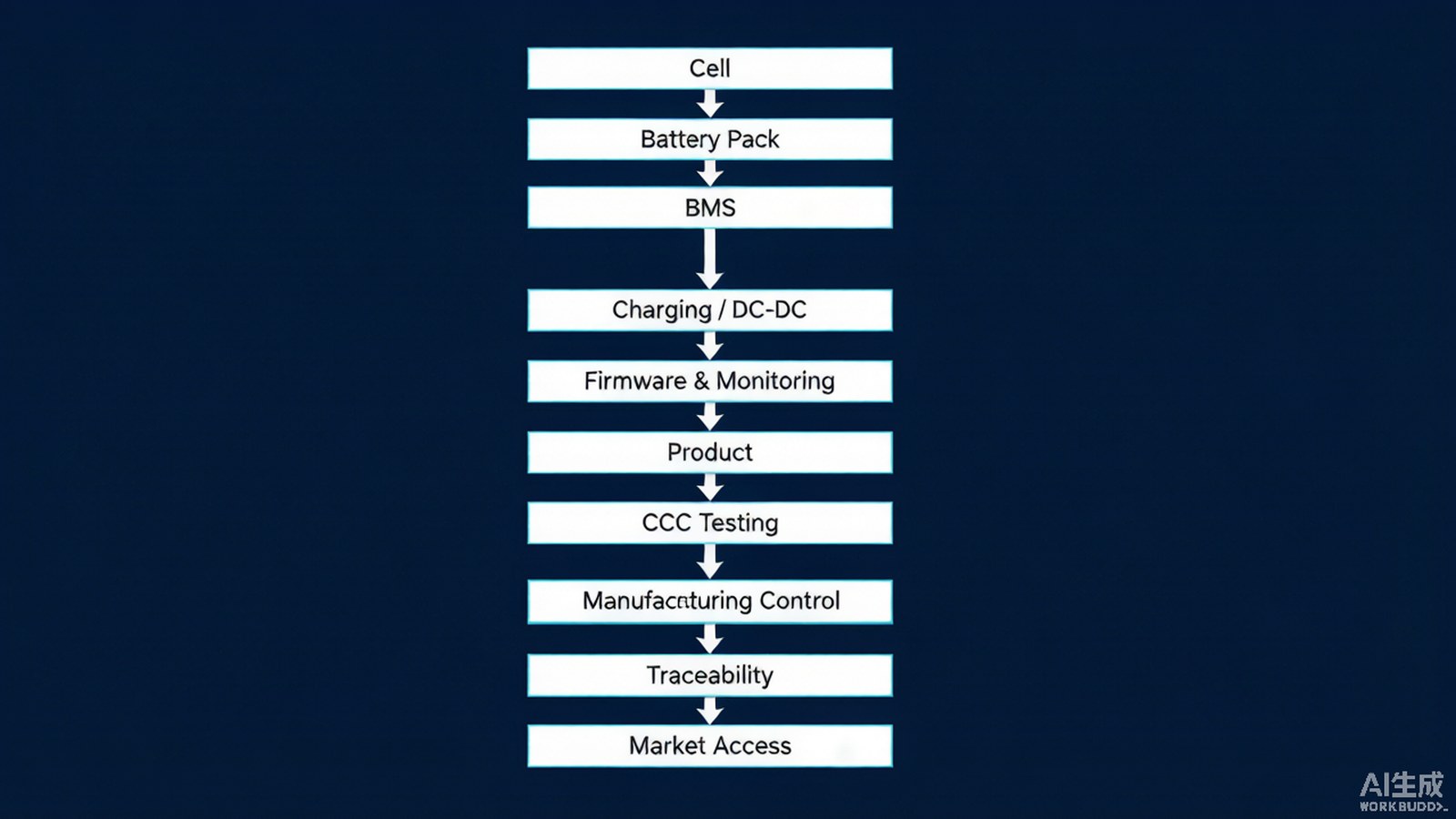
The recommended phase sequence is: Phase 1 Product Classification; Phase 2 Safety Architecture; Phase 3 Engineering Validation; Phase 4 Certification Preparation; Phase 5 CCC Certification; Phase 6 Mass Production Control; Phase 7 Post-Certification Management.
This lifecycle approach is more resilient than treating certification as a single test event.
13. What Existing Power Bank Models Should Do Now?
If you already sell power banks in China, the first step should not be “book a new test.” Instead, perform a CCC transition gap assessment.
Step 1 — Build a certification inventory
Step 2 — Identify engineering changes
Has the battery changed? Has the PCB changed? Has the BMS changed? Has the firmware changed? Has the enclosure changed? Has the supplier changed? Has the factory changed?
Step 3 — Compare against the 2026 requirements
Create a gap matrix covering safety testing, thermal abuse, puncture, monitoring, traceability, product consistency and manufacturing controls.
Step 4 — Decide
Each product should fall into one of four buckets: A — Ready for transition, B — Engineering modification required, C — Certification conversion required, or D — Product should be discontinued.
This is much more useful than simply asking whether the old CCC certificate is still valid.
14. What New Power Bank Projects Should Do in 2026
For a new project entering development now, we recommend a different approach.
Do not design for the minimum 2026 requirement. Instead, design the architecture with the 2027 regulatory direction in mind.
This may mean evaluating battery platform, thermal sensors, BMS capability, fault monitoring, abnormal event handling, product identification, firmware architecture, manufacturing traceability and BOM change control before tooling begins.
For projects that must also support outdoor or extreme-weather applications, the same compliance-driven architecture should be cross-checked against the engineering frameworks developed for the Outdoor Energy Ecosystem and the Extreme-Weather Portable Power in 2026 guide.
A certification-driven redesign after tooling can be expensive. A compliance requirement identified during architecture definition is usually much cheaper to address.
15. A Practical CCC Readiness Checklist for OEM Buyers
Before approving a new power bank design, ask your supplier these questions.
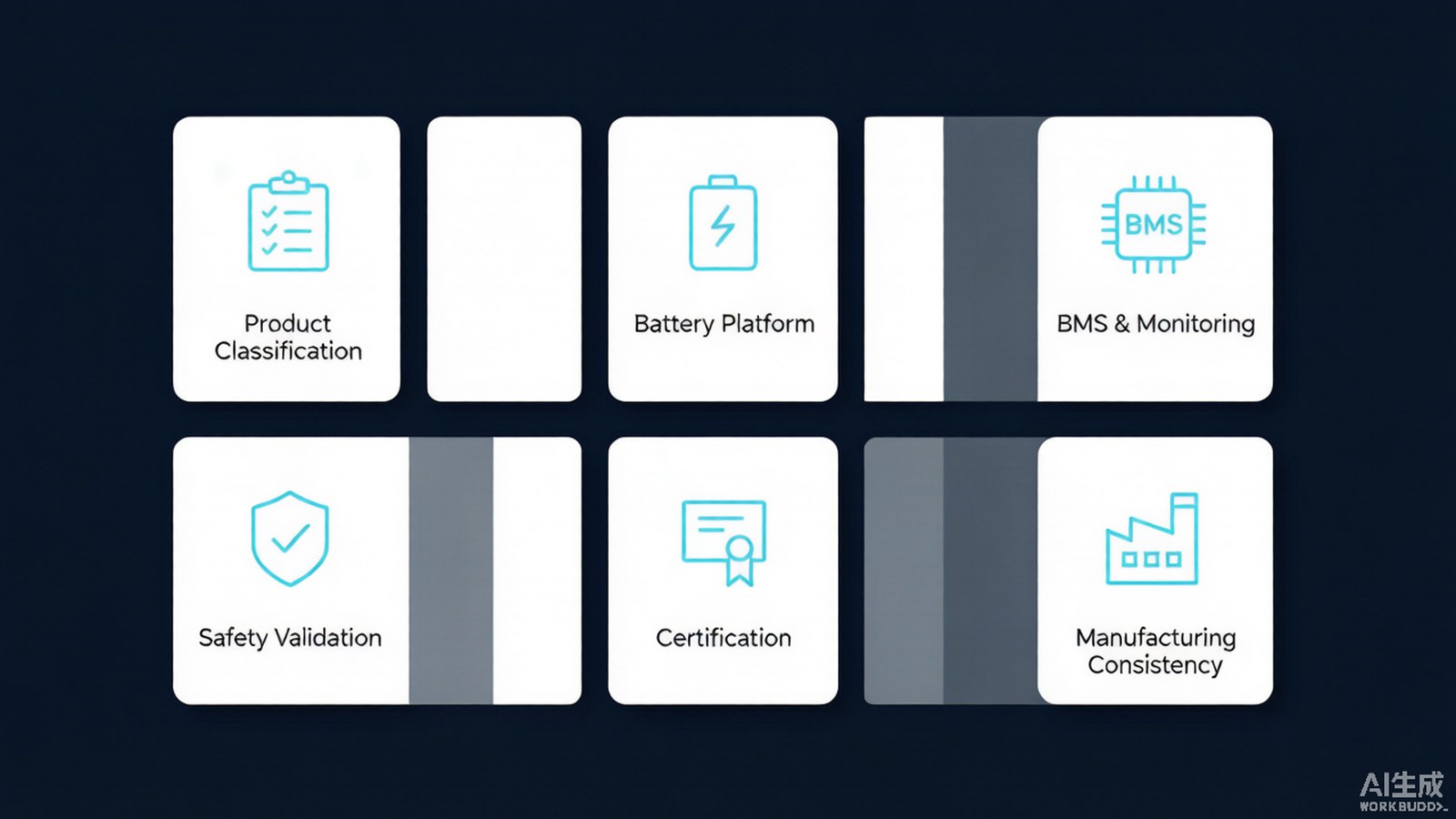
A supplier that cannot answer these questions clearly may be able to manufacture a sample. That does not necessarily mean it can manage a compliant product lifecycle.
16. China CCC Is Becoming a Product-Development Issue
The most important conclusion is not simply that China has introduced a new power bank standard. The deeper change is that compliance is moving closer to product engineering.
The new framework connects battery safety, electrical safety, thermal management, BMS and monitoring, product architecture, manufacturing consistency, traceability, certification and post-certification supervision.
This is why global brands should involve engineering and compliance teams before finalizing the product architecture.
17. How Reachinno Approaches Power Bank Compliance
At Reachinno, we do not treat certification as an isolated testing service. Our product-development approach connects product definition, engineering architecture, compliance planning, prototype validation, manufacturing control and market launch.
We support OEM teams with certification planning and engineering preparation across product definition, engineering, battery, BMS, thermal, prototype, testing, certification preparation, manufacturing, quality and market access.
This is especially important for products involving high-power USB-C PD, 140W / 240W power delivery, high-capacity power banks, multi-cell architectures, wireless charging, rugged outdoor applications, extreme-temperature applications and custom OEM/ODM projects.
For international brands, the objective is not simply “Get a certificate.” It is: Build a product that can remain compliant as it moves from engineering to mass production and into the market.
18. What Global Brands Should Do Before April 2027
If China is part of your target market, we recommend completing the following steps well before the final transition date.
If you have existing products: inventory all CCC-certified models, review battery and PCB changes, check supplier consistency, conduct a GB 47372-2026 gap assessment, confirm certificate conversion requirements with the relevant certification body, review CCC traceability marking, and update production-control documentation.
If you are developing a new product: confirm product classification, select the battery platform early, design BMS and thermal monitoring into the architecture, build product consistency controls before certification, validate the product before tooling, plan certification against the 2027 implementation timeline, and keep a controlled engineering baseline.
19. Final Takeaway
China’s power bank regulatory environment is moving from a relatively certification-centric model toward a more integrated product safety and lifecycle quality model.
GB 47372-2026 will become effective on April 1, 2027. China’s new CCC implementation requirements introduce a transition period through March 31, 2027 and require existing relevant certificates to be converted before the new framework becomes fully mandatory.
The most important changes for OEM teams are not limited to laboratory testing. They include stronger thermal-abuse evaluation, puncture-related safety testing, battery monitoring, abnormal-condition management, product identification, manufacturing-process control, product consistency, stronger post-certification supervision and expanded traceability.
For brands developing power banks in 2026, the safest strategy is therefore not to wait for April 2027. Build the product architecture today with the next compliance environment in mind.
Related Resources
2026 Power Bank Industry Report: The Trends Every OEM Buyer Should Watch — broader market and technology context for the China CCC update.
Read the 2026 Power Bank Industry Report →
Power Bank Certifications & Global Compliance in 2026 — the broader Reachinno compliance cornerstone covering CCC, BSMI, PSE, CE, UL, KC, RCM and other market-access requirements.
Read the compliance cornerstone →
FAQ
Is CCC certification mandatory for power banks sold in China?
Covered mobile power products within China’s CCC catalogue are subject to compulsory certification requirements. The exact applicability depends on the product classification and scope of the current CCC rules. China introduced CCC management for mobile power supplies in 2023.
What is GB 47372-2026?
GB 47372-2026 is China’s mandatory national standard titled Safety Technical Specification for Power Bank. It was published on March 31, 2026 and is scheduled to take effect on April 1, 2027.
When does the new China power bank CCC requirement become mandatory?
The announced transition period runs through March 31, 2027. From April 1, 2027, the new requirements must be fully implemented.
Do existing CCC certificates need to be converted?
Yes. The official announcement states that existing certified mobile power products and their internal lithium-ion batteries and battery packs should complete certificate conversion by April 1, 2027.
What new safety areas should OEM teams pay attention to?
The regulator specifically highlights stronger thermal-abuse and puncture-related testing, along with stronger production quality assurance and product consistency requirements.
Does the new standard affect BMS design?
It can. Public information on GB 47372-2026 describes requirements related to real-time monitoring of key battery parameters such as voltage and temperature, as well as abnormal-information storage/readout and product identification. Exact engineering implementation should be confirmed against the applicable standard and certification rules.
Will the CCC mark require traceability?
China has introduced a CCC traceability QR-code pilot for power banks and other products. New certificates in the pilot categories have been subject to the QR-code requirement since March 1, 2026, with all relevant certified products scheduled to follow the requirement from March 1, 2027.
Should a new power bank project in 2026 be designed for GB 47372-2026?
For products intended to remain on the Chinese market beyond the transition period, it is prudent to assess the 2027 requirements during product architecture and certification planning rather than waiting until the final certification stage.
Does passing the CCC test guarantee ongoing compliance?
No. Certification and production consistency are different issues. China’s updated CCC framework explicitly strengthens production quality assurance, product consistency and post-certification supervision.
Can a battery supplier or PCB be changed after CCC certification?
A component or supplier change may affect certification depending on the nature of the change. OEM teams should use formal engineering-change and certification-change evaluation rather than assuming that an approved product can freely substitute critical components.
Official Sources
GB 47372-2026 — National Standard Database
GB 47372-2026 official standard record
China Market Regulation — 2026 CCC Implementation Update
State Administration for Market Regulation: 2026 CCC update for mobile power products
China Academy of Information and Communications Technology — Certification Update
CAICT certification update on GB 47372-2026
CNCA — 2025 Mobile Power CCC Implementation Rule
CNCA-C09-02:2025 implementation rule
CNCA — CCC Traceability QR-Code Pilot
CNCA: CCC mark traceability QR-code pilot for power banks
Planning a new power bank for China or multiple global markets?
Reachinno can help you evaluate the product architecture, battery platform, BMS, power design and certification path before tooling and mass production.
Talk to our engineering team about your next OEM/ODM project →