Framework RK-02 · Industry & Strategy
Battery Cell Selection Framework
A five-chemistry decision model for B2B buyers and product managers to select the optimal cell type for portable power products — based on application constraints, not supplier catalogs.
Why This Framework Matters
Selecting a battery cell is the single highest-leverage decision in portable power product development. The cell determines your BOM cost, industrial design envelope, certification pathway, thermal architecture, and supply chain strategy. This framework provides a structured methodology to match cell chemistry to application requirements — eliminating the most common and expensive mistake in portable power sourcing.
Knowledge for Better Decisions
In One Minute
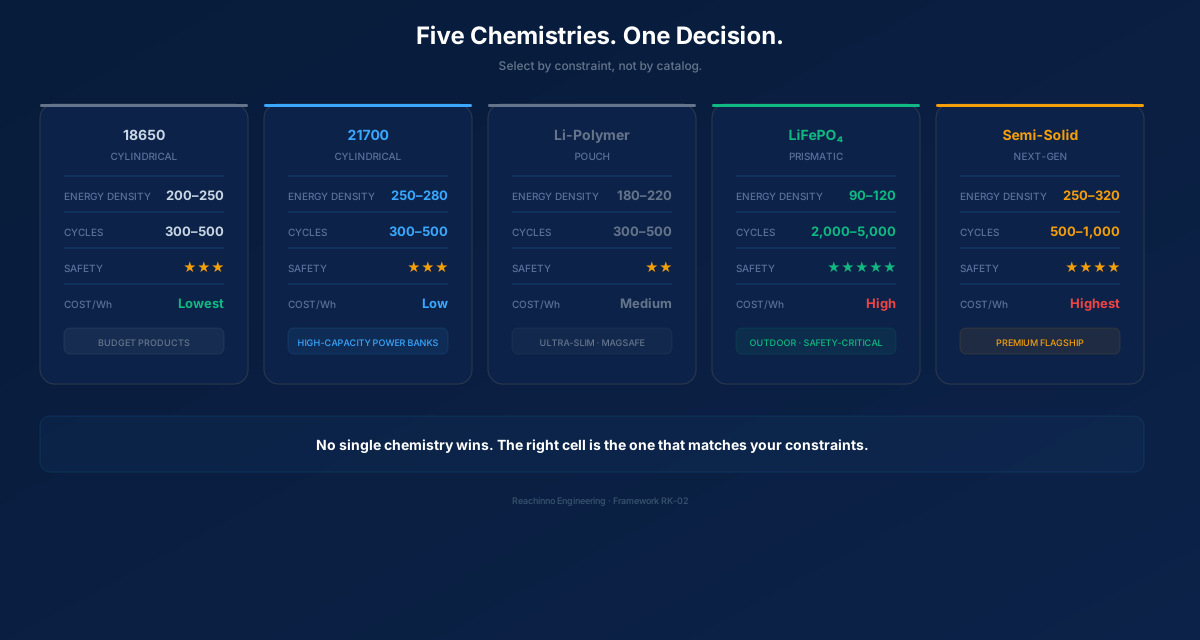
Five battery cell chemistries dominate the portable power landscape — 18650, 21700, polymer, LiFePO4, and semi-solid state. Each has fundamentally different energy density, cycle life, safety characteristics, and cost profiles. No single chemistry is “best.” Selection is about matching the chemistry profile to your product’s specific constraints.
Key Takeaways
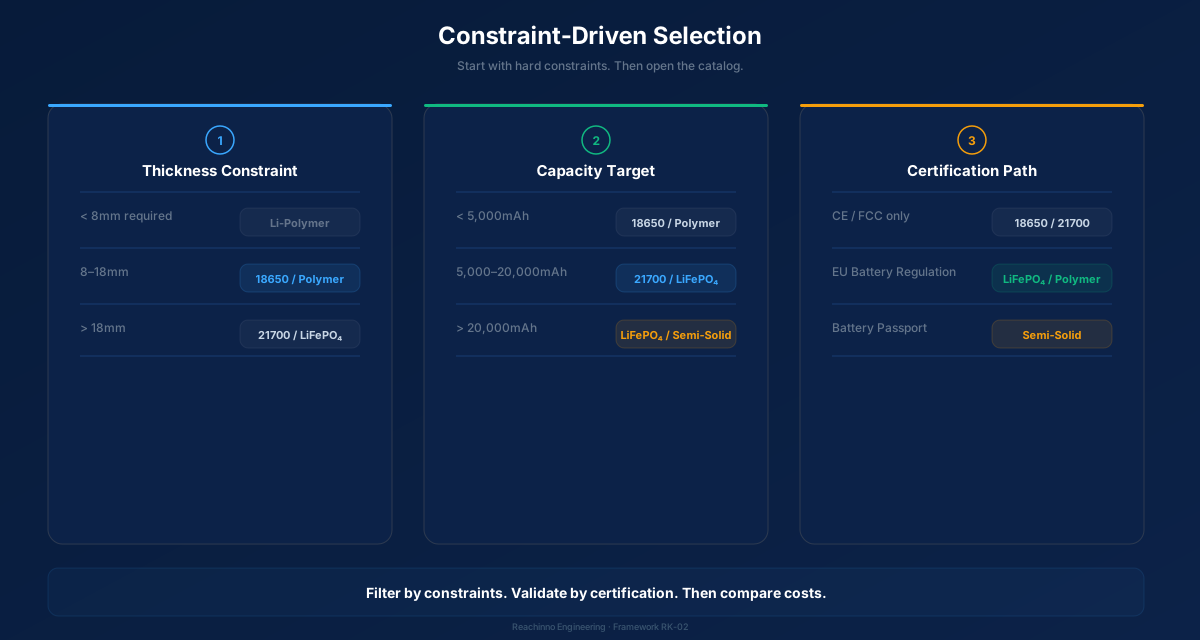
- Cell selection is constraint-driven, not catalog-driven. Start with your product’s hard constraints — thickness, capacity target, cost ceiling, certification requirement — then filter chemistries.
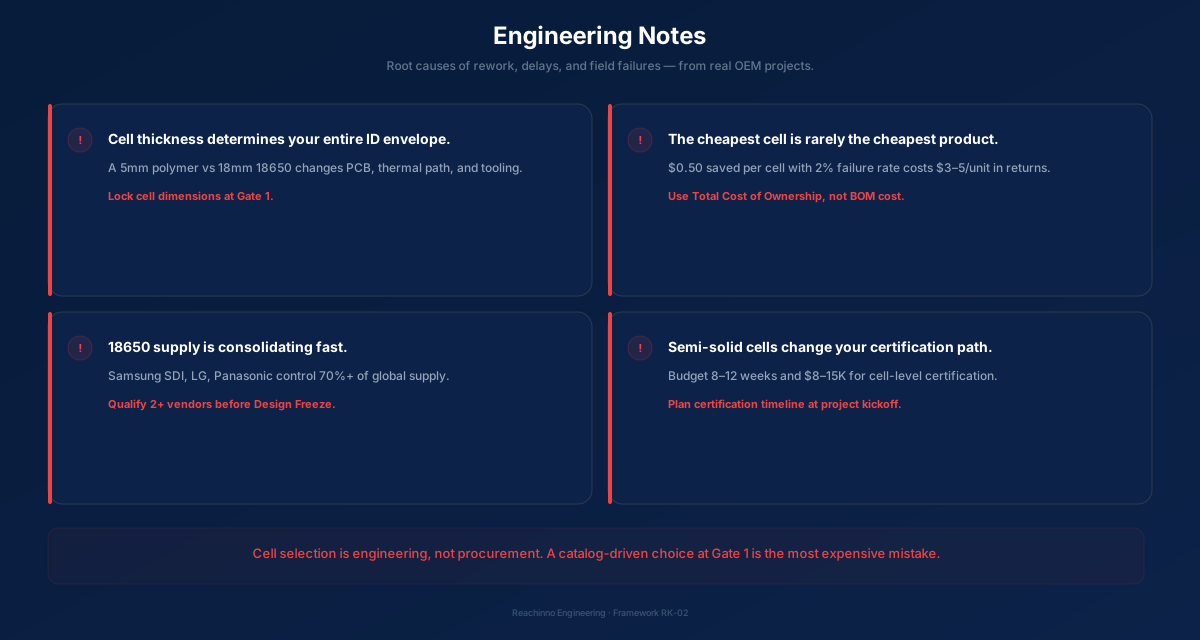
- Cell thickness determines your entire ID envelope. A 5mm polymer cell vs an 18mm 18650 changes PCB placement, thermal path, and enclosure tooling. Lock cell dimensions at Gate 1.
- The cheapest cell is rarely the cheapest product. A cell saving $0.50/unit with 2% higher field failure rate costs $3-5/unit in returns. Total Cost of Ownership is the right metric.
- 18650 supply is consolidating. Samsung SDI, LG Chem, and Panasonic control 70%+ of global supply. Qualify at least two approved vendors before Design Freeze.
- Semi-solid cells change your certification pathway. Budget 8-12 weeks and $8,000-$15,000 for cell-level certification before product-level certification can begin.
The Five Chemistries
Each chemistry has a distinct profile across six engineering dimensions. The decision flow below maps your product constraints to the optimal chemistry. Use this before opening a supplier catalog.
| Chemistry | Nominal Voltage | Energy Density (Wh/kg) | Cycle Life | Safety Rating | Cost per Wh | Best Application |
|---|---|---|---|---|---|---|
| 18650 Cylindrical | 3.6V | 200-250 | 300-500 | ★★★ | $ (lowest) | Budget products, standard form factors |
| 21700 Cylindrical | 3.6V | 250-280 | 300-500 | ★★★ | $$ | High-capacity power banks |
| Lithium Polymer | 3.7V | 180-220 | 300-500 | ★★ | $$$ | Ultra-slim designs, MagSafe |
| LiFePO4 | 3.2V | 90-120 | 2000-5000 | ★★★★★ | $$$$ | Outdoor/industrial, safety-critical |
| Semi-Solid State | 3.7V | 250-320 | 500-1000 | ★★★★ | $$$$$ | Premium flagship products |
Comparison Matrix
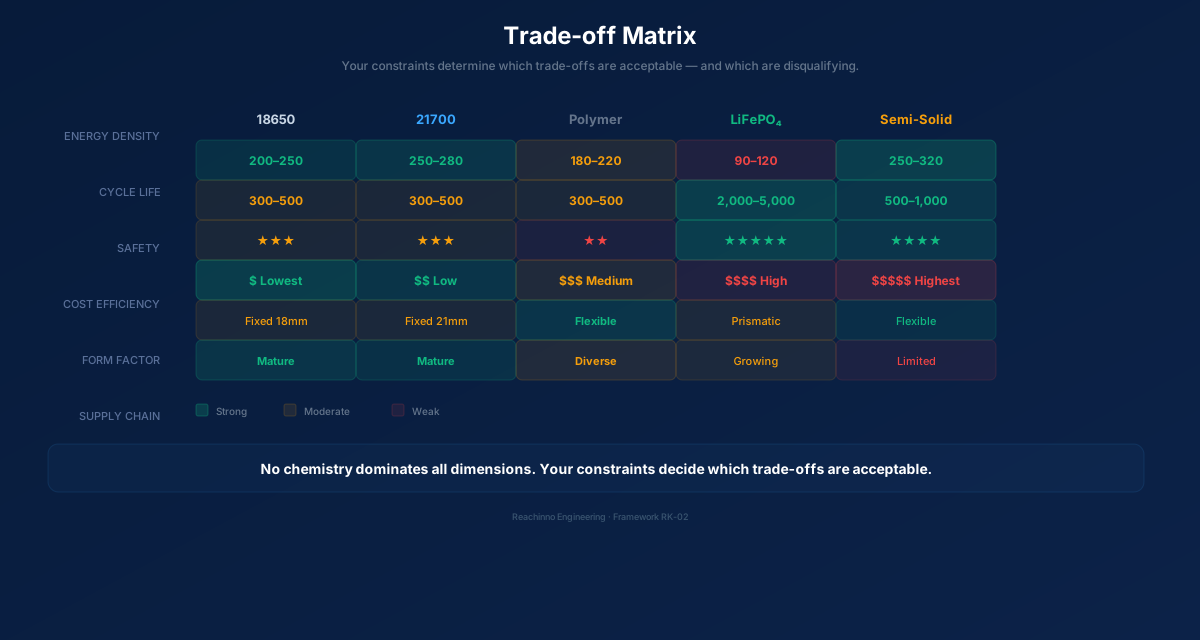
The comparison matrix above visualizes the trade-offs between chemistries across five critical dimensions. No single chemistry dominates all dimensions. Your product constraints determine which trade-offs are acceptable and which are disqualifying.
Engineering Notes
The following observations come from Reachinno engineering teams working on real OEM cell selection projects. These are not theoretical trade-offs — they are the root causes of tooling rework, certification delays, and field failures we see repeatedly.
Cell selection is not a procurement exercise — it is an engineering decision that propagates through every subsystem of your product. The most expensive mistake is selecting a cell from a catalog and discovering at EVT that it cannot meet your certification, thermal, or mechanical requirements.
Application Map
The application map maps each chemistry to the product categories where it delivers the best combination of performance, cost, and reliability. Use this as a starting point — your specific constraints may shift the optimal chemistry by one category.
Real Project: Cell Selection Case Study
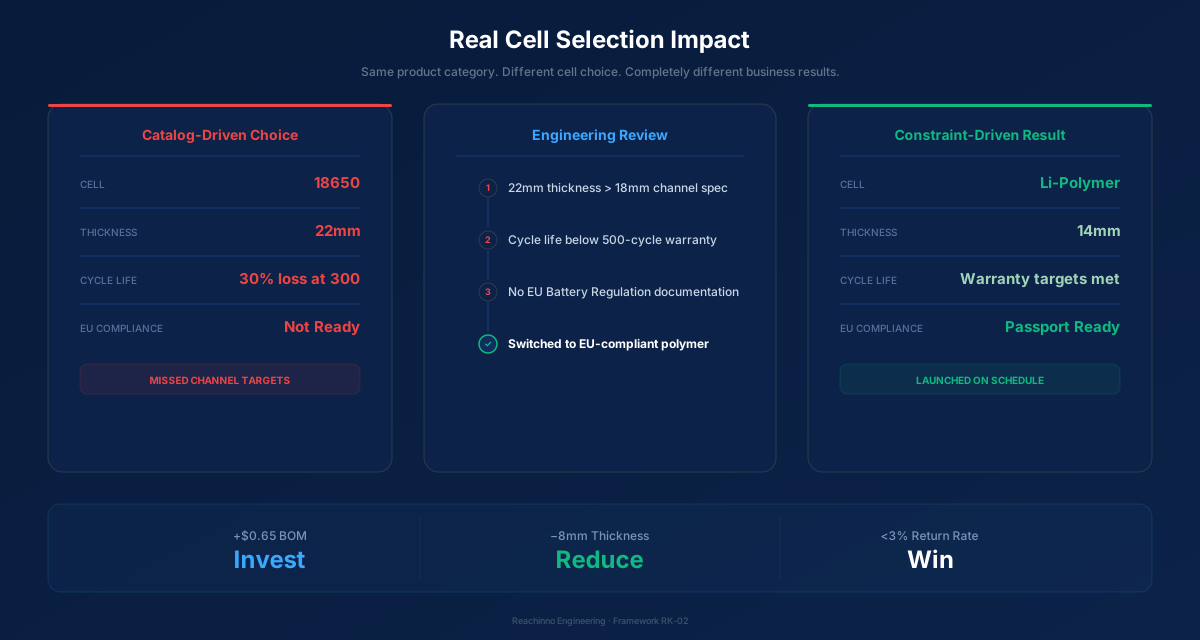
A North American brand planned to launch a 10,000mAh power bank using 18650 cells — the standard choice at their target BOM cost. During engineering review, we identified three issues: (1) 18mm cell diameter forced 22mm product thickness, above the 18mm retail channel target; (2) supplier cycle life data showed 30% degradation at 300 cycles, below the 500-cycle warranty target; (3) the supplier could not provide EU Battery Regulation compliance documentation.
We recommended switching to a polymer cell from a Tier-2 supplier with full EU compliance. BOM cost increased by $0.65/unit. Product thickness decreased from 22mm to 14mm, warranty targets became achievable, and EU market access was secured. Product launched on schedule with <3% return rate in the first 12 months.
Frequently Asked Questions
Q: Can I mix cell types in one product?
No. Different chemistries have different voltage curves, charge profiles, and aging characteristics. Mixing creates BMS complexity never worth the cost savings.
Q: How do I verify cell capacity claims?
Require third-party test reports with IEC 61960 methodology. Spot-test 5-10% of production batches independently.
Q: What is the minimum order quantity for custom polymer cells?
Typically 5,000-10,000 units for custom dimensions. Standard sizes have lower MOQs. Semi-solid cells currently have MOQs of 10,000+ and 12-16 week lead times.
Framework Version
| Framework | Version | Published | Contributors | Engineer Review |
|---|---|---|---|---|
| RK-02 | 1.0 | July 2026 | Reachinno Engineering Team | Charleen Li |
Related Frameworks
- RK-01 Portable Power Industry Evolution Model
- RK-03 OEM Development Stage-Gate Framework
- RK-05 Battery Safety Pyramid
- RK-10 Cost Engineering Decomposition Model
Apply This Framework to Your Cell Selection
Talk to our engineering team about cell selection for your next product.