Why I’m Writing This (From Real Factory Questions)
I’ve been deep in lithium batteries and power banks for over a decade, and this question pops up constantly from customers, retailers, and even colleagues: “Is fast charging bad for my power bank?” “Should I always slow-charge it to make the battery last longer?”
The confusion makes total sense—there’s a ton of misinformation out there. Even in factories, debates rage about charging speeds and their impact on aging.
In this article, I’ll break it down based on my actual engineering tests, prototype failures, and production data—not just textbook theory. We’ll cover:
- The real differences between fast and slow charging
- What battery lifespan actually means (hint: it’s cycles, not years)
- The “300 cycles to 80%” standard and why it matters
- Practical tips to charge your power bank properly
No fearmongering here. Just straightforward facts to help you charge smarter.
A Quick History: Lithium Battery Charging Has Come a Long Way
Back in the early 2000s, lithium-ion batteries charged slowly by today’s standards: low currents, conservative profiles, and plenty of safety margins. Fast charging? It barely existed.
Then smartphones exploded. We needed quicker top-ups without waiting hours. Battery tech evolved—better materials, smarter protection circuits, and higher power density made it possible.
Fast charging wasn’t invented to wreck batteries. It emerged because the technology finally caught up to handle the extra stress safely.
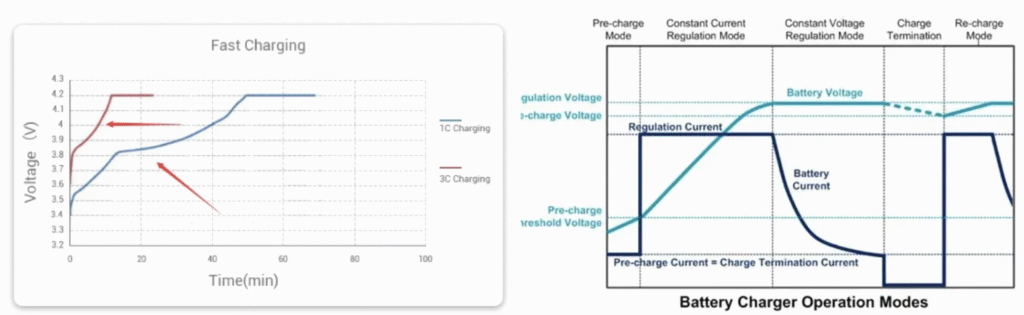
Fast Charging vs Slow Charging: The Real Differences
Let’s keep it simple with a side-by-side look.
🔌 Slow Charging
- Lower input current
- Minimal heat buildup
- Gentler stress per charge
Pros: Less thermal wear, theoretically slower degradation. Cons: Takes forever—not ideal for daily life.
⚡ Fast Charging
- Higher current and power input
- More heat during the process
- Demands robust battery and circuit design
Pros: Huge like 65W PD can fully charge a big power bank in under an hour. Essential for modern gadgets. Cons (only if poorly designed): Accelerated stress, potential for quicker aging or safety issues.
Key takeaway from my lab tests: Fast charging isn’t inherently destructive. Bad design is the real culprit—cheap cells or inadequate cooling turn manageable heat into a problem.
Battery Lifespan: Demystifying the “300 Cycles to 80%” Standard
This is where most myths start. Battery life isn’t counted in years—it’s in charge cycles.
The industry gold standard (used in IEC 62133, UL tests, CB certifications, and warranties): After 300 full cycles, a quality lithium battery should retain at least 80% of its original capacity.
What counts as one cycle? It’s not every plug-in. A full cycle equals using (and recharging) 100% of the capacity. Example: Drain from 100% to 50%, recharge to 100%, then drain to 50% again = one cycle. Frequent partial top-ups? They barely count—great for longevity!
Why 80%? In my field data and returns analysis, once capacity dips below that:
- Noticeably shorter runtime
- Unstable voltage
- Faster heating under load
It’s “end of prime life,” not dead. Many batteries keep going beyond, just with reduced performance.
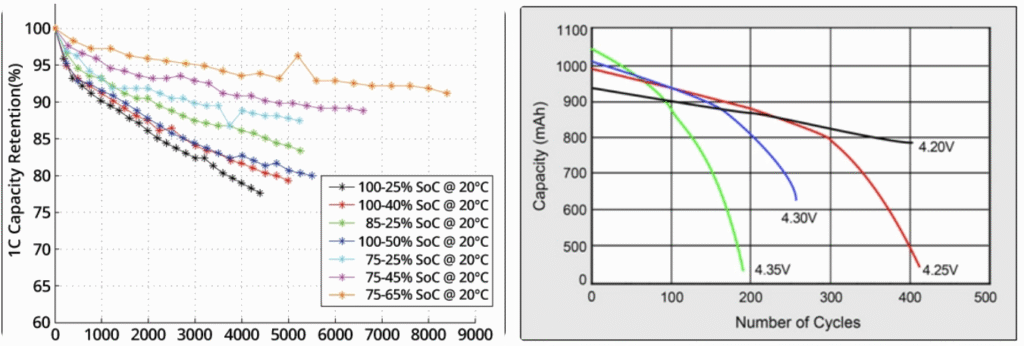
How Fast Charging Really Affects Cycle Life
The honest engineering answer: Fast charging alone doesn’t slash cycles—if the power bank is well-engineered.
Properly designed ones (good cells, thermal management) easily hit 300–500+ cycles at 80%+, even with regular fast charging.
The real degraders? Excessive heat and high C-rates (more on that next). I’ve seen poorly made units drop to 70% after just 200 cycles, regardless of charging speed.
The Hidden Culprit: Battery C-Rate
C-rate measures charge/discharge speed relative to capacity:
- 1C = full charge in ~1 hour
- 2C = full charge in ~30 minutes
Higher C-rates generate more internal heat and stress, accelerating aging. That’s why:
- Large-capacity power banks (e.g., 20,000mAh+) handle fast charging better—lower relative C-rate.
- Tiny ones (e.g., magnetic minis) struggle and are recall-prone: small capacity + high power = extreme C-rates, leading to swelling or worse.
In projects I’ve led, we’ve rejected cells that couldn’t handle the target C-rate without overheating.
What I’ve Seen Damage Batteries in the Real World
From thousands of returns and lab teardowns:
- Overheating (from environment or poor design)
- Sustained high C-rates
- Shoddy thermal management
- Inconsistent cell quality
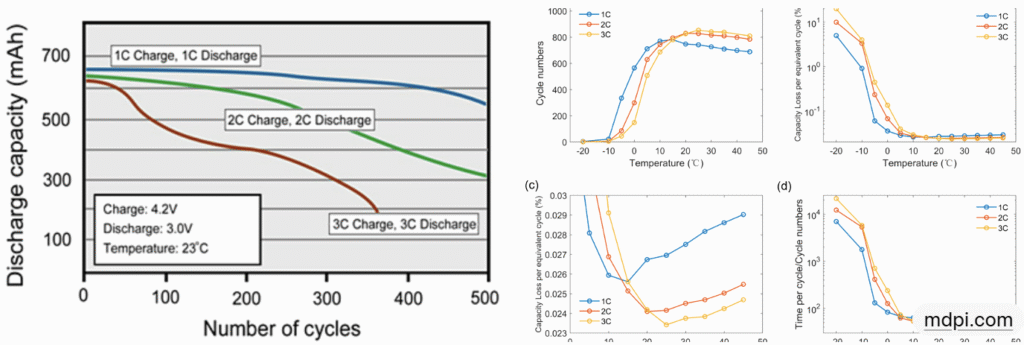
Not “using fast charging.” Many mini/magnetic recalls? Exactly that combo of small size + aggressive charging.
So, Fast or Slow Charging for Your Power Bank?
Practical advice:
✅ Go ahead with fast charging if:
- Your power bank is from a reputable brand (good design)
- It stays cool during charging
- You use certified chargers/cables
✅ Opt for slow charging when:
- You’re overnight charging
- It’s getting warm
- Maximizing every possible cycle
❌ Always avoid:
- Sketchy no-name chargers
- Charging in hot cars/sun
- Damaged or swollen units
How to Properly Charge Your Power Bank: Best Practices
Simple rules from real production experience:
- Stick to certified chargers and cables
- Keep it cool—avoid direct sun or bundling
- Top up anytime (partial charges are fine!)
- Quality trumps speed obsession—a well-made bank survives real-world use
Final Takeaways (Remember These 3)
1️⃣ Fast charging doesn’t ruin batteries—heat and high C-rates do.
2️⃣ Lifespan = 300 cycles to 80% capacity (partial charges help!).
3️⃣ Bigger capacity + solid design = longer, worry-free life.
Get this, and you’ll charge confidently without overthinking.
About the Author
Written by an OEM/ODM Power Bank Engineer at Reachinno With 10+ years in power bank factories—battery sourcing, prototypes, certifications (UL, CB, etc.), and fixing real issues like swelling and fast-charge failures. Everything here is from hands-on tests, failures, fixes, and shipped products. 👉 Connect on LinkedIn for more insights on battery safety and design.