Why This Article Matters (From Real Factory Experience at Reachinno)
As a leading manufacturer of innovative charging solutions at Reachinno, we’ve fielded countless questions from customers, buyers, and tech enthusiasts: “If my power bank is 10,000mAh, why doesn’t it charge my iPhone three times?” This isn’t a naive query—it’s a common misconception stemming from how battery specs are marketed and misunderstood.
In our factory testing labs, we’ve seen this play out repeatedly. A seemingly straightforward mAh calculation often leads to disappointment when real-world physics intervenes. Drawing from years of engineering power banks with advanced features like Qi2.2 wireless charging and semi-solid-state batteries, this encyclopedia-level guide demystifies battery capacity vs energy. We’ll use real iPhone 17 series data, physics principles, formulas, and practical insights to explain why milliamp-hours (mAh) alone can’t predict charging times. By the end, you’ll be equipped to make smarter decisions about power banks and avoid common pitfalls.

1. What Does “mAh” Really Mean? A Deep Dive into Battery Capacity
Milliamp-hour (mAh) measures the quantity of electric charge a battery can store. It’s like counting the number of electrons available: one mAh means the battery can deliver 1 milliamp (mA) of current for one hour.
- Formula Basics: Charge (Q) = Current (I) × Time (t), so mAh = mA × hours.
- Why It’s Popular: mAh is simple and sounds impressive—10,000mAh feels substantial. But it’s incomplete without voltage, as it ignores the “pressure” behind the charge.
- Historical Context: mAh originated from lead-acid batteries but became standard for lithium-ion cells in consumer electronics. In power banks, it’s typically rated at the internal cell’s nominal voltage (around 3.7V for Li-ion).
However, mAh doesn’t account for how that charge is used. For instance, drawing current at higher voltages (like USB’s 5V) requires conversion, introducing losses. This is where energy (Wh) comes in.
2. Understanding Watt-Hours (Wh): The True Measure of Battery Energy
Watt-hours (Wh) quantify the total energy a battery can deliver, incorporating both charge and voltage. It’s the work the battery can perform, not just the raw charge.
- Key Formula: Energy (Wh) = Capacity (Ah) × Voltage (V). Since mAh is common, convert: Wh = (mAh / 1,000) × V.
- Why Wh Matters: Unlike mAh, Wh is universal. Airlines limit power banks by Wh (e.g., <100Wh for carry-on) because it reflects actual energy potential.
- Physics Principle: From Ohm’s Law (V = IR) and Power (P = IV), energy integrates power over time. Wh aligns with real-world usage, where devices operate at varying voltages.
For a typical power bank: A 10,000mAh rating at 3.7V yields ~37Wh. But phones like the iPhone draw at 5V or higher, so direct mAh comparisons fail.
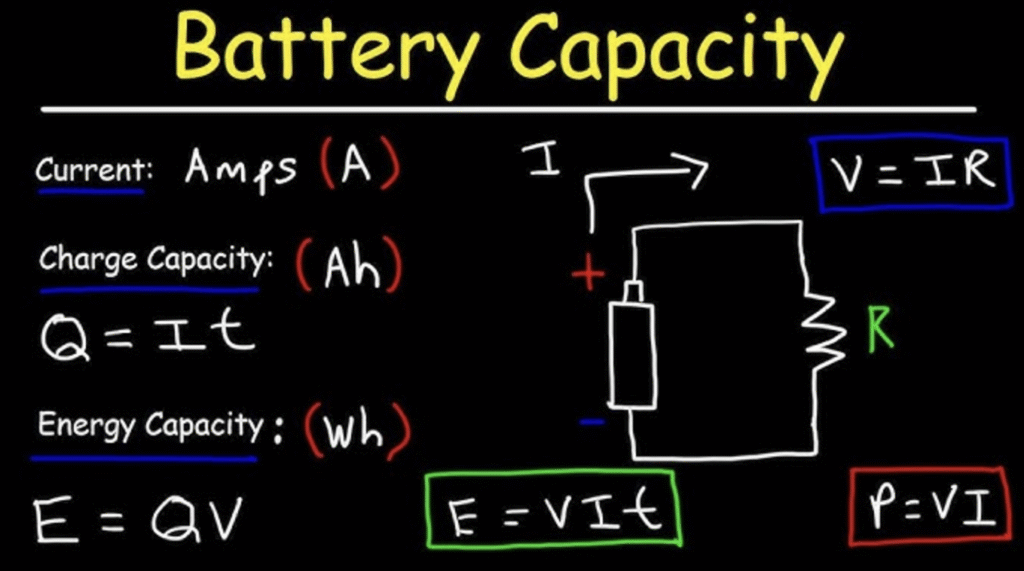
Battery Capacity – Amp-Hours, mAh, and Watt-Hours
3. Why mAh Alone Is Misleading: The Capacity vs Energy Misconception
People often divide power bank mAh by phone mAh (e.g., 10,000 / 3,300 ≈ 3 charges) and expect perfect results. But this ignores voltage differences and inefficiencies.
- Voltage Mismatch: Power banks store energy at ~3.7V but output at 5V (USB-A), 9V/12V (PD/QC fast charging), or even wirelessly via Qi. Boosting voltage requires DC-DC converters, which aren’t 100% efficient.
- Real-World Data: In Reachinno’s tests, a 10,000mAh bank rarely delivers more than 2-2.5 full charges to modern smartphones due to these factors.
- Common Myth Bust: Marketing focuses on mAh because it’s a larger number, but regulations (e.g., UN38.3 for batteries) emphasize Wh for safety.
To compare apples-to-apples, always convert to Wh.
4. How to Calculate True Energy: Formulas and Examples
Let’s break it down step-by-step.
Step 1: Convert Power Bank mAh to Wh
Wh = (mAh / 1,000) × Nominal Voltage (typically 3.7V for Li-ion).
Example: 10,000mAh Power Bank Wh = (10,000 / 1,000) × 3.7 = 10Ah × 3.7V = 37Wh
Step 2: Account for Efficiency Losses
Real usable energy = Nominal Wh × Efficiency (80-92%, average 85% for quality banks).
Usable Wh ≈ 37Wh × 0.85 = 31.45Wh
Step 3: Convert Device Battery to Wh
Use the phone’s nominal voltage (also ~3.7V, but confirm specs).
For iPhone 17: 3,692mAh × 3.7V ≈ 13.66Wh
Step 4: Estimate Charges
Number of Charges ≈ Usable Power Bank Wh / Device Wh
Example: 31.45Wh / 13.66Wh ≈ 2.3 charges
This is theoretical—real tests show slight variations.
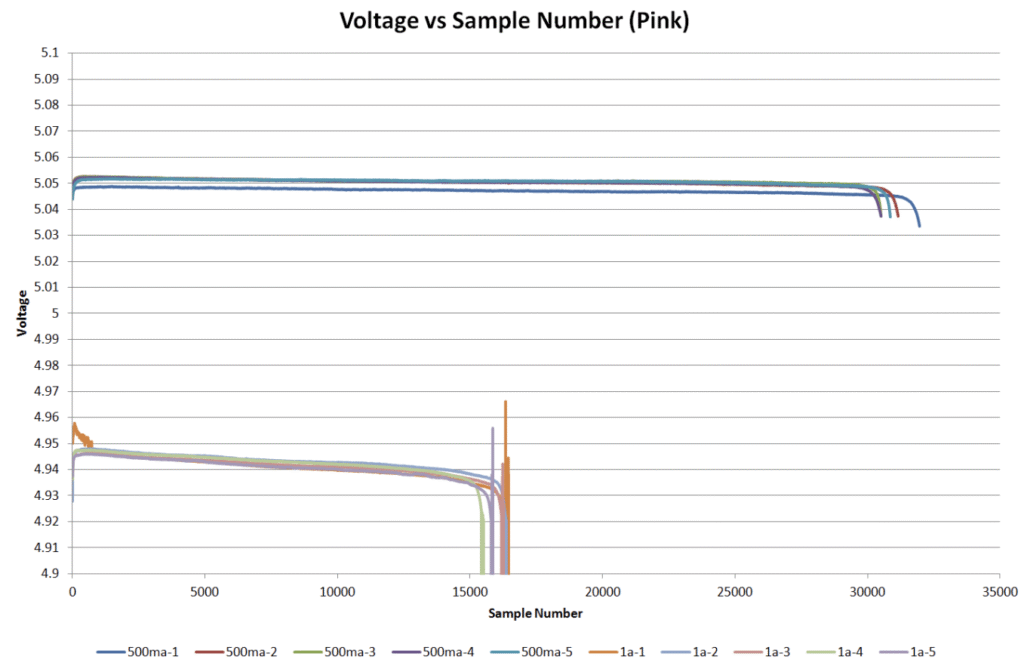
Tested: Two Naked Power Bank Internals (5600mAh, 4400mAh …
5. Smartphone Battery Examples: Focus on iPhone 17 Series
Apple’s 2025 iPhone 17 lineup showcases advanced battery tech, but mAh ratings still mislead without energy context. Here’s the latest data from reliable sources:
| Model | Battery Capacity (mAh) | Nominal Voltage (V) | Energy (Wh) Approx. |
|---|---|---|---|
| iPhone 17 | 3,692 | 3.887 | 14.35 |
| iPhone 17 Air | 3,149 | 3.894 | 12.26 |
| iPhone 17 Pro | 4,252 | 3.894 | 16.56 |
| iPhone 17 Pro Max | 5,088 | 3.887 | 19.78 |
Sources: MacRumors, Apple Specs, GSMArena (eSIM models for max capacity). Note: Actual voltage per Apple is slightly higher than 3.7V, improving energy density.
Using a 10,000mAh (37Wh) power bank at 85% efficiency:
- iPhone 17: 31.45Wh / 14.35Wh ≈ 2.19 charges
- iPhone 17 Pro Max: 31.45Wh / 19.78Wh ≈ 1.59 charges
In factory tests at Reachinno, we simulate these with load testers, confirming losses reduce it further by 5-10%.
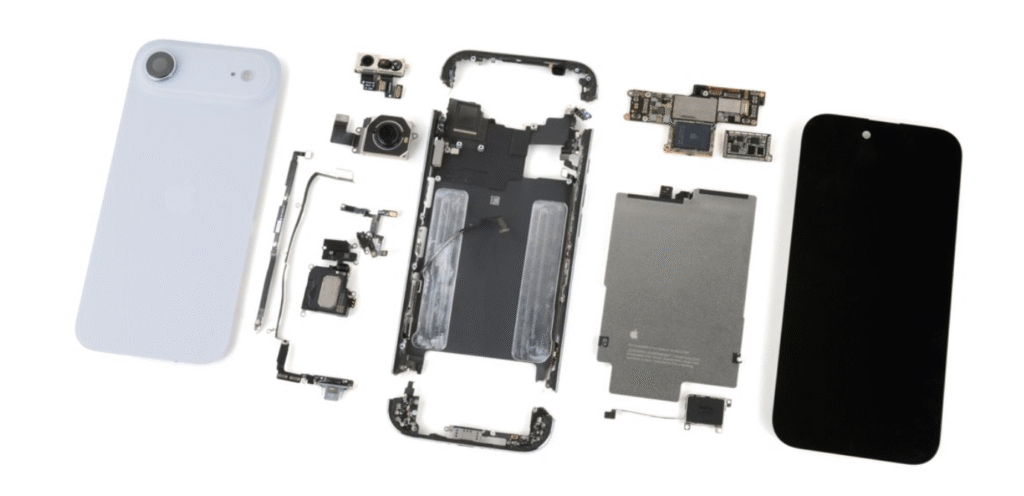
iPhone Air teardown shows how Apple pulled off the thin design
6. Real-Life Factors That Reduce Usable Energy: In-Depth Analysis
Even perfect calculations overlook practical losses:
- Conversion Loss (85-92%): DC-DC boost circuits generate heat. Premium banks like Reachinno’s with semi-solid-state cells hit 92%.
- Cable & Connector Resistance: Poor cables drop voltage, losing 2-5% energy as heat.
- Internal Cell Resistance: Aging or low-quality cells waste 1-3%.
- Phone-Side Inefficiencies: iPhones use BMS (Battery Management Systems) that throttle charging for safety, adding 5-10% loss.
- Environmental Factors: Cold temps reduce efficiency by up to 20%; heat causes throttling.
From our experience: In certification tests (e.g., for Qi2.2), we measure output Wh directly—always lower than nominal.
7. Simple Physical Analogy: Water Tank vs Battery
Imagine a water tank:
- mAh (Capacity): Tank volume (liters)—how much water it holds.
- Voltage: Water pressure (psi)—how forcefully it flows.
- Wh (Energy): Total work done (e.g., turning a turbine)—volume × pressure.
A high-volume tank at low pressure does less work than a smaller one at high pressure. Similarly, boosting a power bank’s 3.7V to 5V “pumps up” the pressure but loses water (energy) in the process.
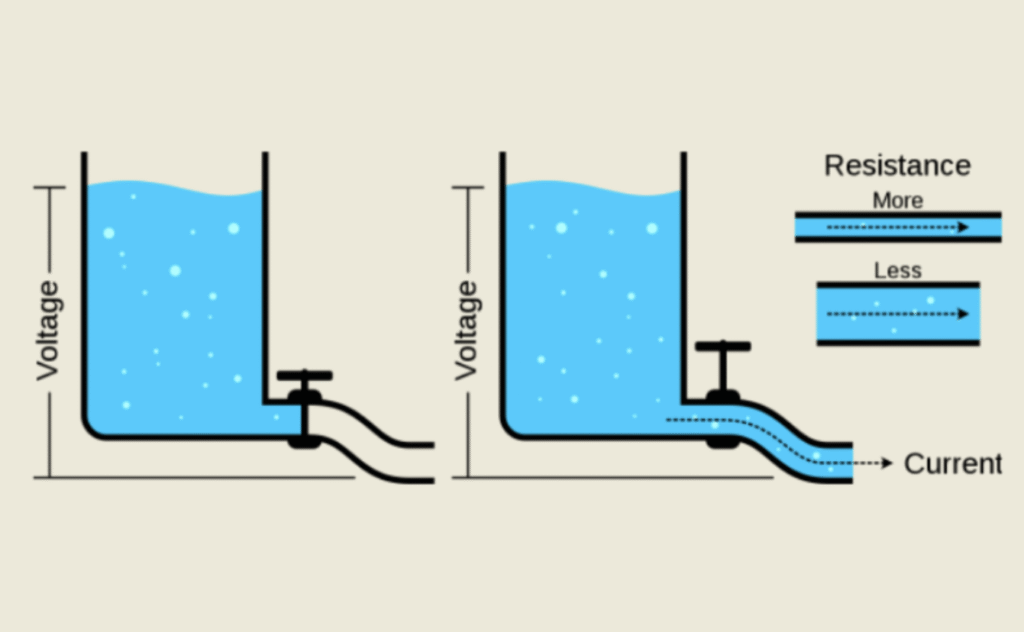
Battery Energy Flowing Like Clear Water – News about Energy …
8. Practical Calculator: Tools for Accurate Estimation
Use this simple formula in a spreadsheet:
- Power Bank Wh = (mAh / 1000) × 3.7
- Usable Wh = Wh × 0.85 (adjust for your bank’s spec)
- Charges = Usable Wh / (Phone mAh / 1000 × Phone V)
For Reachinno products, check our specs for exact efficiency ratings—our high-power retractable cable series minimizes cable losses.
9. Why Power Banks List mAh Instead of Wh: Marketing vs Reality
mAh inflates perceived value (10,000 > 37), but Wh is the honest metric. Industry shifts toward Wh for transparency, especially in 3C-compliant products. At Reachinno, we provide both to educate users.
10. Bottom Line: Key Takeaways from Factory Insights
- mAh is charge quantity; Wh is usable energy.
- Always calculate Wh for accurate comparisons.
- Expect 80-90% efficiency in quality power banks.
- iPhone 17 examples highlight why mAh math fails.
- Real tests > theory: Factors like cables and temperature matter.
Conclusion: Empower Your Charging Choices
Understanding battery capacity vs energy isn’t just academic—it’s essential for product design, certification, and consumer satisfaction. At Reachinno, our upcoming 2026 lineup (Qi2.2 upgrades, semi-solid-state series, high-power cables) prioritizes real Wh output for better performance. Next time you shop, look beyond mAh—demand Wh specs for true value.
For more on our 3C-compliant innovations, visit reachinno.com.